May, 2025
A shared operating system for HR, recruiters, and candidates
A recruiting platform that turns HR, recruiters, and candidates into one shared workflow — designed 0→1, shipped, and in use across Taiwan, Vietnam, Singapore, and Japan.
B2B SaaS
0→1 → Funded
APAC · 4 Markets
AI-powered
Role
Sr. Product Designer
team
2 Product Designers, 3 Engineers ( FE, BE, AI )
platform
Web
Timeline
1 year (ongoing iteration)

BACKGROUND
LeapIn is a cross-border recruiting firm — the platform began as a fix for its own business. Hiring across borders still runs on email and scattered files: no one knows which job description is current, updates die in mail threads, and the same questions come back every week. The more jobs the team took on, the more hours went to reconciling information instead of recruiting.
GOAL
Prove that alignment could live inside the platform — and that it changes the economics of hiring.
Cut time and cost per position — the value clients actually pay for
Speed up the feedback loop — the behavior that builds trust between both sides
Accumulate structured data — the foundation for market analysis and the AI phase to come
MY ROLE
Owned product design from 0→1 to scale
Partnered directly with founders and engineers in a PM-less environment.Shaped product strategy through research and synthesis
Worked with in-house and external recruiters and client HR teams.Architected the shared recruiting workflow and pipeline model
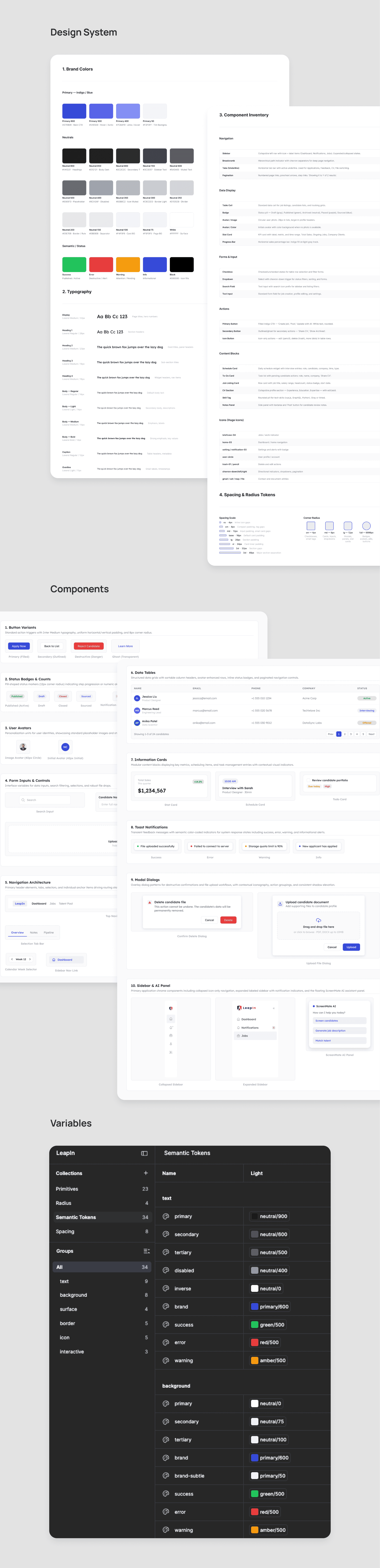
Across HR, recruiters, and candidates.Established the brand guidelines and design system
Enabling a consistent and scalable product experience.
RESULT
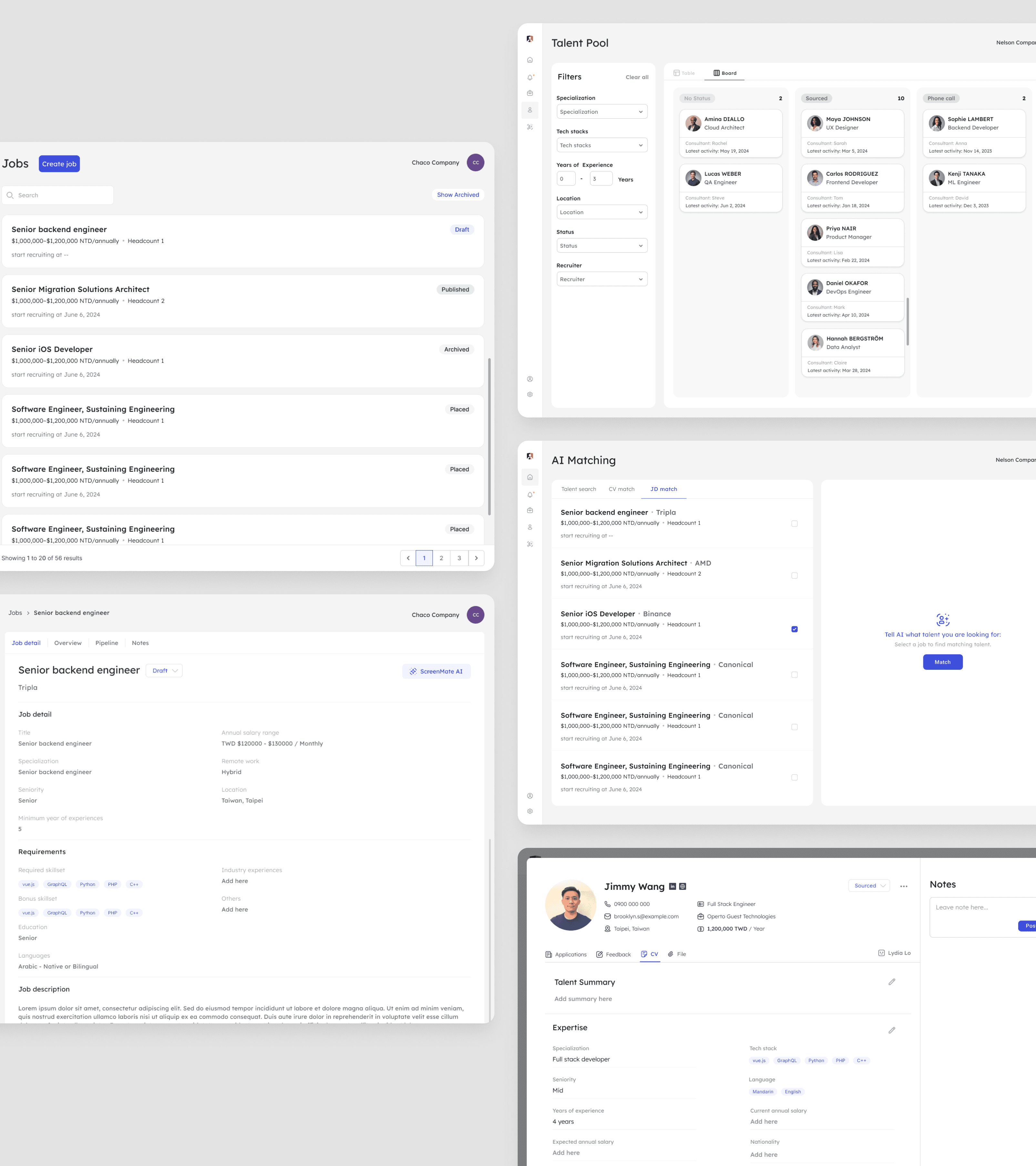
Launched in Q3 2024 and now used by partner companies and recruiting firms across Taiwan, Vietnam, Singapore, and Japan. By the team's estimate, hiring for a single position on LeapIn took 51% less time and 29% less cost. Based on internal workflow comparisons before and after platform adoption, using average recruiter-reported time and cost per role. This traction supported the company's fundraising.
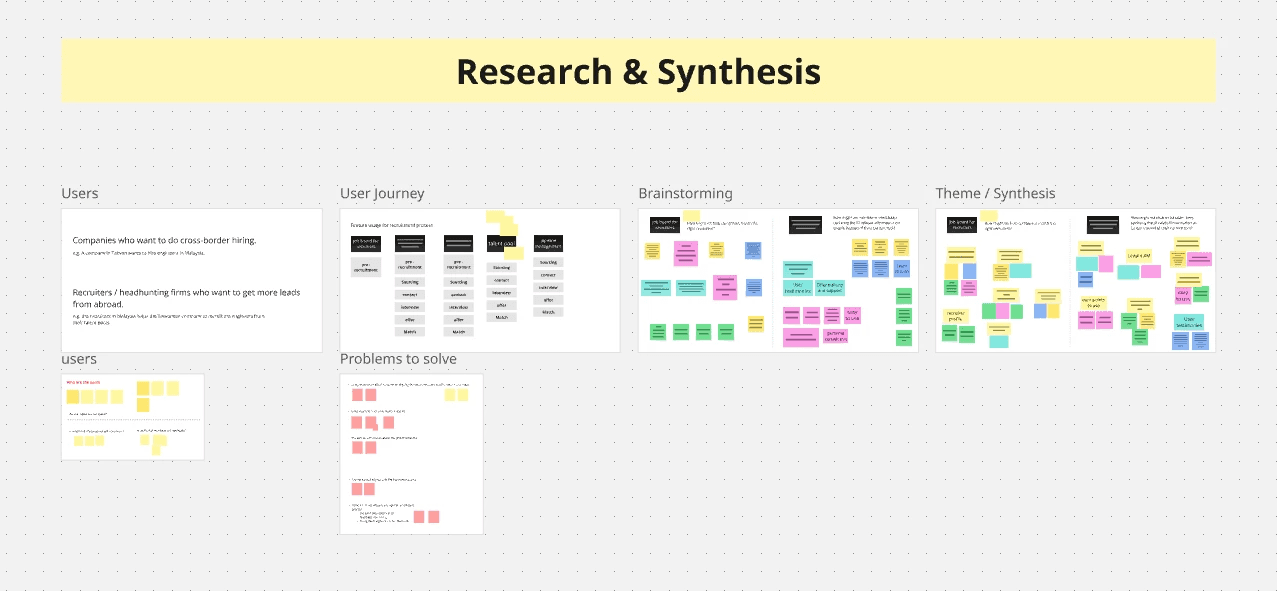
1. Time isn't spent finding people — it's spent aligning information.
Research kept showing the same pattern: the hours went into reconciling versions of the same information — not into sourcing or interviewing.
The leverage is alignment, not ATS.
On the opportunity map, pipeline tools were already crowded; a single source of truth for job information had high impact and few competitors.
Transparency is political.
Companies needed pipeline visibility to keep sending cases; recruiters couldn't show detail without losing leverage.

HR, recruiters, and candidates share one product — different workflows, different permissions, opposite needs for transparency.
Design carried the roadmap. Founders had features they wanted first, and every investor demo brought back a new ask.
SOLUTION
Scope as strategy
Build the foundation before the features that need it.
The MVP did one thing: make the JD the single source of truth. Information consistency had the highest impact and the least competition — and everything we deferred would run on that data.
IA as permission model
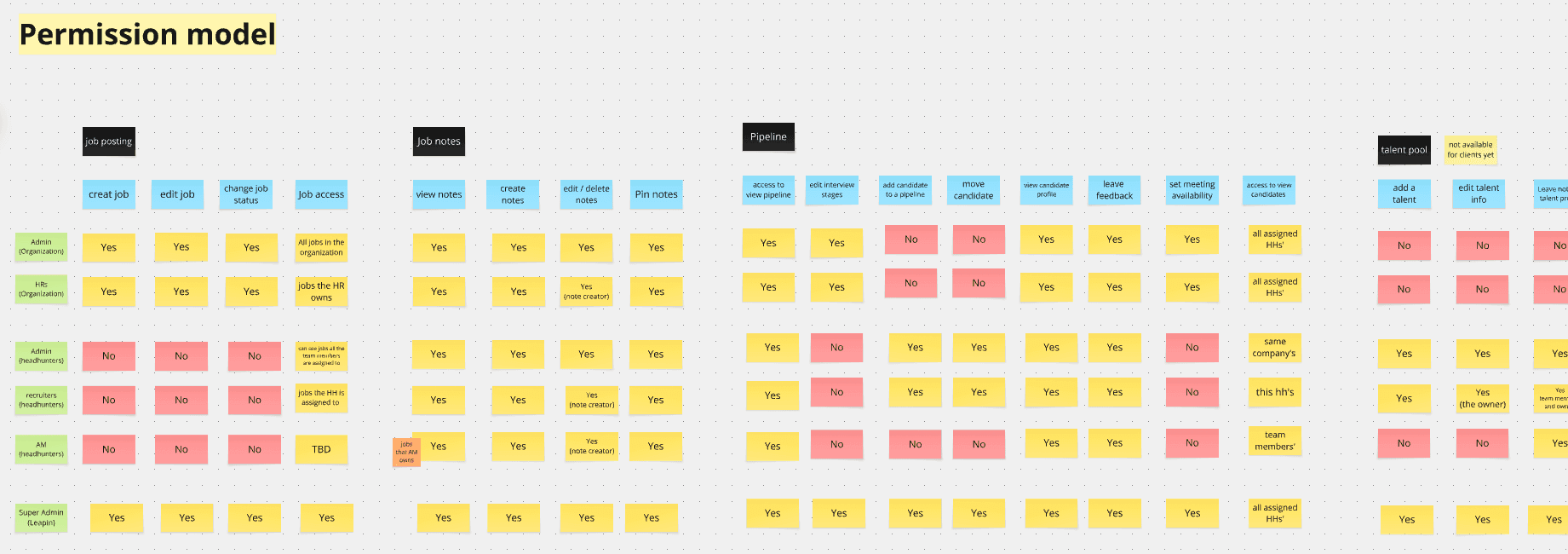
One hierarchy made permissions listable.
Company → Job → Candidate is the spine for every feature. That turned access into a matrix instead of ad-hoc rules — scope words like "assigned firm" or "team members" compose most of it, and the layer stays open for group-based permissions later.
▏Keywords cover most rules, not all. The few real exceptions were redesigned to fit the system rather than special-cased.
One status, two views
One status engine. Two role-specific views.
Both parties feel they own the workflow; what they see is a controlled view. The same logic runs down to field level, and handoffs become tasks instead of emails.
▏Every new stage has to make sense in both views at once — adding a status means designing it twice.
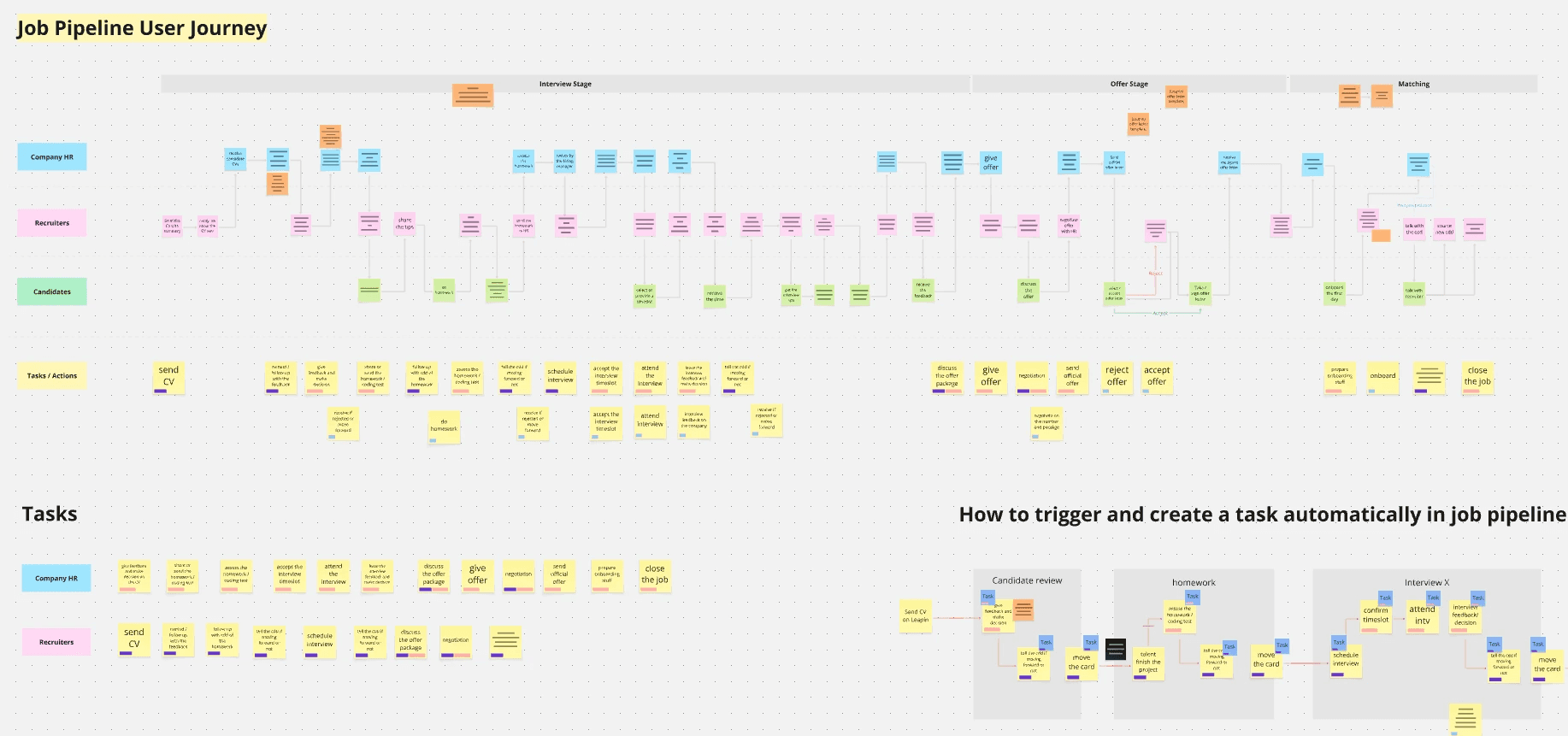
The clean version came second. The first spec ran two status tracks — one for the talent pool, one for the job pipeline — and keeping them mapped started producing exactly the ad-hoc rules the system was meant to remove. Both boards still sit side by side in Miro: the one that taught us, and the one that shipped.
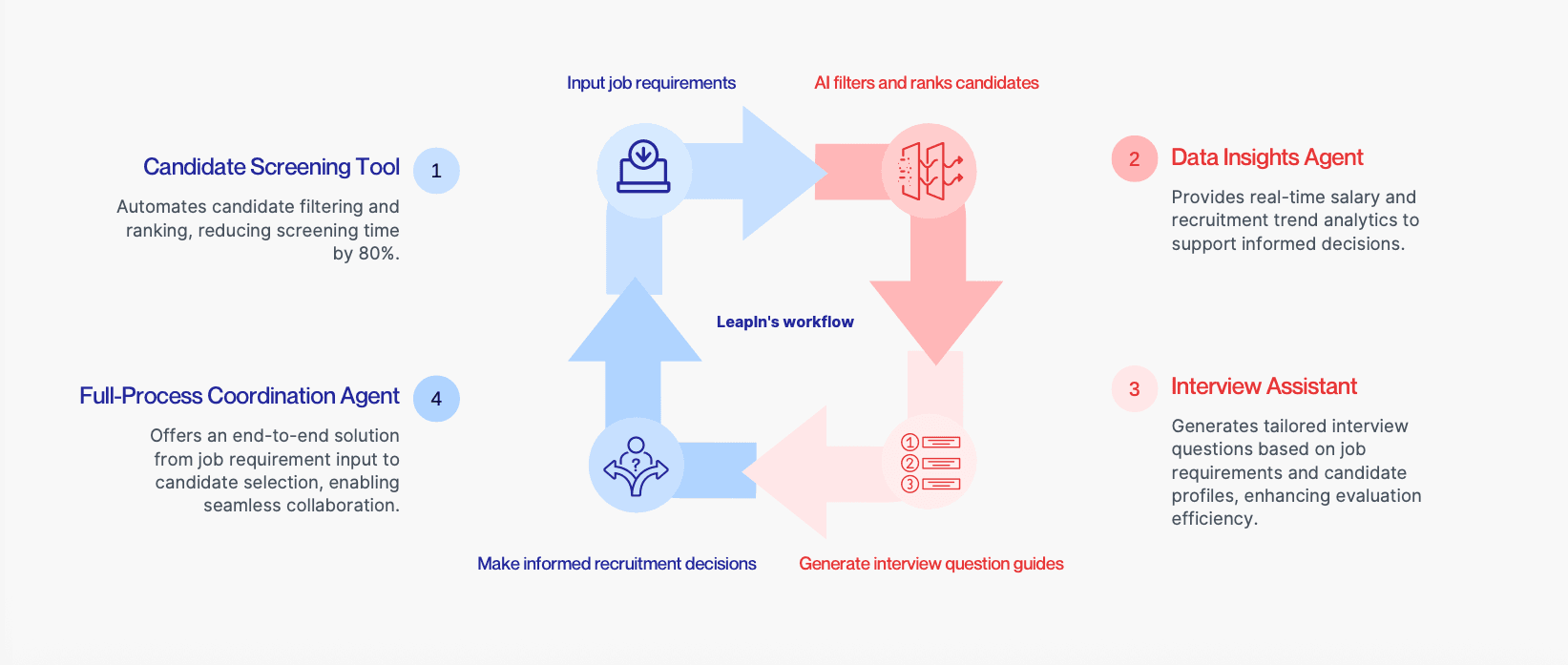
Later evolution
Once the data foundation held, AI layered on top: four agents across the flow — screening and ranking, data insights, interview preparation, and end-to-end coordination. (Detailed AI workflows are omitted for confidentiality.)
DESIGN PROCESS
IMPACT
TAKEAWAY 🧠
Honestly, writing this case study felt very different from designing the product itself.
When I was building it, I was deep in the details — workflows, permissions, edge cases, and how everything fit together. But writing it meant stepping back, untangling all that complexity, and making it understandable to someone who wasn’t there.
It turned out that explaining a complex product can be just as challenging as designing one.